Commercial concrete flatwork is one of the most critical phases of any construction project. Done right, it sets the foundation for everything that follows. Done wrong, it creates costly problems that are difficult and expensive to fix.
Site Preparation Comes First
Before a single yard of concrete is poured, the subgrade must be properly graded, compacted, and prepared. In Texas, soil conditions vary significantly across the state — expansive clay soils in the DFW area behave very differently from the sandy loam soils found in parts of Central Texas. Understanding local soil conditions is essential to designing a slab that won't heave, crack, or settle.
Proper subgrade preparation typically includes:
- Removing organic material and debris
- Compacting the soil to the required density (usually 95% Proctor)
- Installing a vapor barrier to manage moisture migration
- Placing and tying rebar or post-tension cables per the structural engineer's specifications
Mix Design Matters
Not all concrete is the same. The mix design — the ratio of cement, aggregate, water, and admixtures — determines the strength, workability, and durability of the finished slab. For commercial applications in Texas, we typically work with mixes in the 3,000 to 4,000 PSI range, with admixtures added to control set time in hot weather.
Texas summers present a real challenge. When ambient temperatures exceed 90°F, concrete can set too quickly, reducing workability and increasing the risk of plastic shrinkage cracking. Experienced crews know how to manage this with ice water, retarders, and proper scheduling.
The Pour and Finish
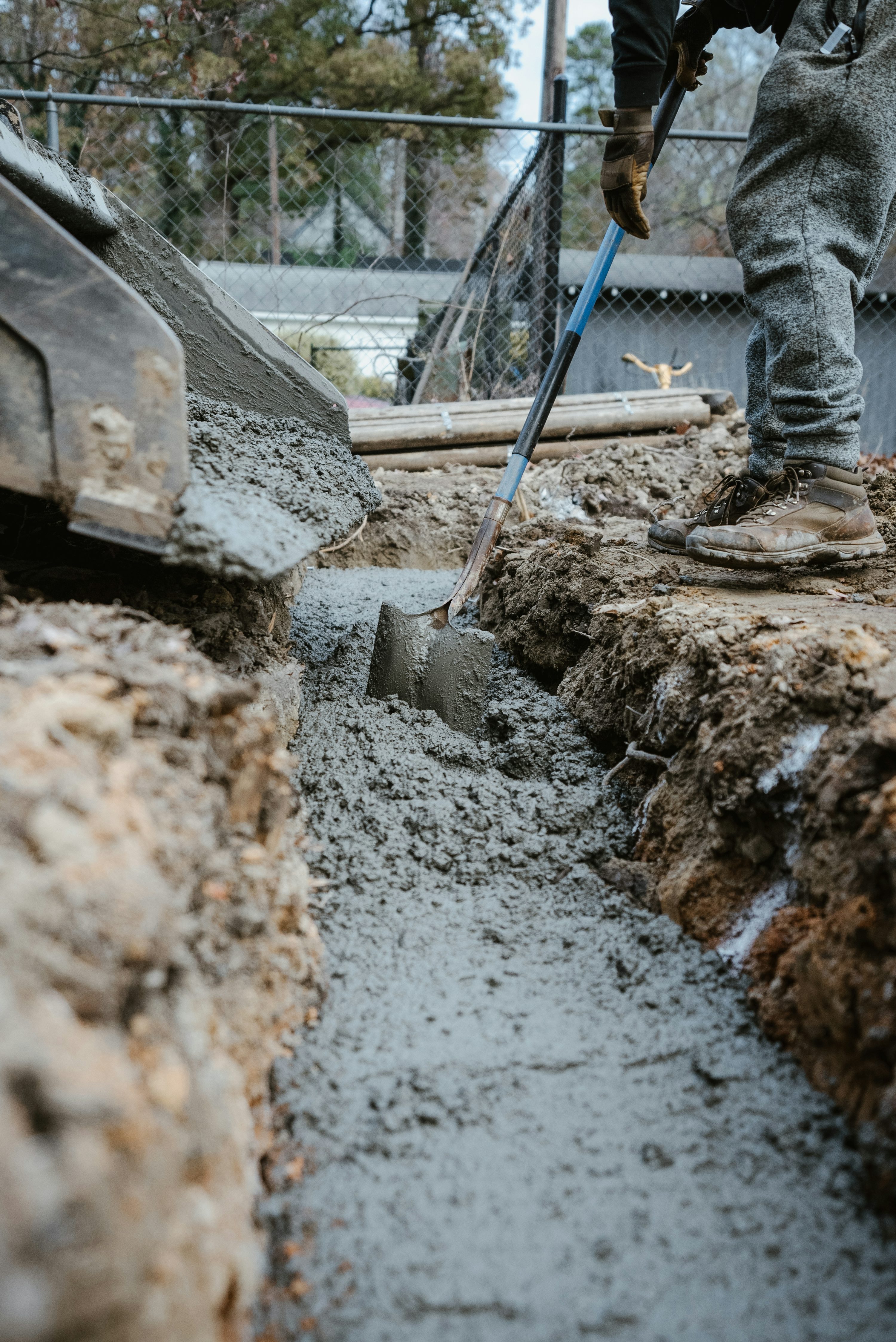
A concrete pour is a coordinated effort. The crew needs to be ready before the first truck arrives, because once the concrete starts flowing, there's no stopping. Screeding, bull floating, and edging all happen in sequence, followed by the final finish — whether that's a broom finish for exterior flatwork or a smooth trowel finish for interior slabs.
Control joints are cut or tooled into the slab to direct cracking to predictable locations. Proper joint spacing is critical — too far apart, and you'll see random cracking across the slab.
Curing
Curing is often the most overlooked part of the concrete process. Concrete doesn't "dry" — it cures through a chemical reaction called hydration. Keeping the slab moist for at least 7 days after placement significantly increases final strength and reduces surface dusting and scaling.
At Brickment Solutions, we take every phase of the concrete process seriously — from subgrade prep to final cure. If you're a general contractor or developer planning a commercial project in Texas, we'd welcome the conversation.